Black Hooded Figure Dream Meaning: Interpreting the Shadow in Your Sleep
Hello Dreamers. Dreaming of a black hooded figure is commonly a profound message from your subconscious, pointing to hidden fears, unacknowledged emotions, or a call to confront what you’ve been avoiding. That sudden image in the haze of night can be startling, but I’ve found in my own dream journeys that such figures often arrive not as threats, but as guides to deeper self-awareness.
Let’s explore the hidden layers together. In this article, I’ll help you find clarity by covering:
- The psychological roots: encounters with your shadow self
- Spiritual interpretations: from ancient archetypes to personal guardians
- How your emotions in the dream reshape its meaning
- Actionable ways to reflect and find peace after waking
The Enigmatic Silhouette: Understanding Your Hooded Figure Dream
That black hooded figure in your dream is more than a random phantom. It is a profound symbol crafted by your subconscious, using the hood’s concealment, the color’s depth, and the hidden face to speak in a visual language. The hood acts like a curtain, deliberately keeping identity a secret, which can signal something your mind isn’t ready to see directly. The color black absorbs all light, often representing the unknown, mystery, or the vast unconscious parts of yourself you’ve yet to explore. That obscured face? It’s the ultimate question mark, leaving you to project your own fears or curiosities onto its blank slate.
The atmosphere in these dreams is thick with sensation. You might recall the chilling silence broken only by your heartbeat, the faint brush of coarse fabric if you dared get close, or the way shadows seemed to cling to the figure’s form. This sensory haze creates a potent mix of emotions that is your first clue to the dream’s meaning. From a psychological perspective, experts often ask whether such imagery carries meaning beyond the moment. Do dreams mean something, or are they just random brain activity?
- Dread: A cold, sinking feeling that speaks to primal fear or a warning your psyche is sounding.
- Curiosity: A pull to look closer, suggesting an inner readiness to face what’s hidden.
- Oppression: A heavy, smothering weight that often mirrors feelings of being controlled or overwhelmed in waking life.
This figure captivates us because it is a perfect mirror for the parts of life and self that feel just out of view.
Why That Shadow Haunts Your Sleep
Your mind uses this haunting image for specific reasons. Fundamentally, it personifies the things you cannot-or will not-see clearly. I’ve dreamed of a silent hooded figure standing at the foot of my bed during a period of intense career indecision. In hindsight, it was my own fear of the future taking a tangible, watchful form. These dreams often bubble up when you’re grappling with hidden aspects of your personality, unprocessed emotions like guilt or shame, or simply the nagging anxiety of what comes next. The hooded figure is your psyche’s dramatic way of saying, “Pay attention here.”
The First Step: Recalling the Dream’s Emotional Texture
Before jumping to symbolism, ground yourself in the dream’s felt experience. The biggest pitfall is taking every symbol literally, so keep that in mind. Dreams are symbolic and invite interpretation rather than direct readings. Grab your journal and walk through these steps.
- Note the dominant emotion upon waking. Was it pure terror, or a strange, calm awe? This emotion is the truest compass for your interpretation.
- Recall any sensory details. Did you hear footsteps, whispers, or utter silence? Could you feel a temperature change? These fragments anchor the dream in reality.
- Consider the figure’s actions. Did it simply observe, follow, or reach out? Its behavior reveals intent, from passive reflection to active engagement with your psyche.
This three-step process pulls the dream from the fog of memory and gives you solid material to work with.
Shadows of the Psyche: Psychological Interpretations
From a psychological lens, the black hooded figure is rarely an external monster. It is a manifestation of internal landscapes. Think of it as a character in the ongoing story your mind tells about your inner world.
| Keyword | Psychological Meaning |
|---|---|
| Shadow Self | Repressed traits, instincts, or desires you deny in yourself. |
| Repression | Emotions or memories forcibly pushed out of conscious awareness. |
| Anxiety | A generalized fear of the unknown or a specific, unaddressed stressor. |
| Intimidation | An internal power struggle or feeling of being dominated by a part of yourself. |
This table simplifies complex ideas, but your personal dream context will bring them to life.
Confronting the Shadow Self
In Jungian psychology, the “shadow” contains the traits we deem unacceptable. The hooded figure can be this shadow, made visible. Imagine your mind as a house where you’ve locked a room full of things you’re ashamed of-maybe natural anger, deep sadness, or a boldness you suppress. The dream figure is that locked door, now standing in your hallway. Confrontation isn’t about battle; it’s about acknowledgment with self-compassion. I learned to ask my dream figures, “What do you represent?” and the answers often led to gentle self-forgiveness.
Anxiety and Fear of the Unknown
When life feels like a foggy path, your dreams can project that uncertainty as a hooded silhouette. The hood directly symbolizes something you feel you cannot see or control, like a health worry, a financial shift, or a relationship’s unclear future. That looming figure is often the shape of your “what ifs.” A useful tip is to draw the figure upon waking, then jot down the first three real-life situations that pop into your head. The connection is usually startlingly clear.
When Intimidation Mirrors Inner Conflict
Does the figure feel oppressive, like it’s draining your dream-space of air? This often mirrors an inner conflict where one part of you is dominating or silencing another. You might feel overwhelmed by duties (the figure’s imposing presence) or at war with a personal decision. Journaling questions like “Where in my life do I feel small or voiceless?” can unravel the dream’s specific message. The intimidation in the dream is a signal to reclaim your inner balance.
Mystical Messengers: Spiritual and Symbolic Meanings

Spiritually, this figure walks a line between ominous harbinger and sacred guide. Its appearance can signal a crossroads on your path, inviting you to look beyond the physical. The mystical interpretation hinges not on fear, but on the quality of energy you felt in its presence. Was it menacing or simply solemn? This distinction is everything.
The Hooded Guide and the Awakening
Sometimes, what first feels threatening is actually a spiritual nudge. I once dreamed of a hooded figure pointing down a dark forest path. Terrified, I woke up. Months later, I took a literal trip that led to a major personal insight, and the dream’s imagery suddenly made sense. This figure can be a guide, asking you to trust your intuition and move forward even when the way isn’t lit. It symbolizes the ancient archetype of the wise one who appears when you’re ready for deeper introspection.
Metaphors of Death and Transformation
Rarely about physical death, the hooded figure here symbolizes necessary endings. It is the herald of a personal rebirth. Think of it as the symbolic death of an old habit, a stagnant belief, or a life chapter that has served its purpose. Like a snake shedding its skin, the dream marks the moment you are ready to release what no longer fits you. The darkness of the hood represents the fertile void from which new growth emerges.
Omens and Warnings: Listening to the Subconscious
The fear of a bad omen is common, but your subconscious is more ally than enemy. A dream warning is less about predicting doom and more about highlighting a real-life danger or a path that may lead to emotional harm. Listen by practicing mindful awareness: has your intuition been whispering about a person, choice, or situation that feels “off”? The dream amplifies that whisper. Trust this internal radar, but pair it with practical, grounded assessment of your waking circumstances.
Visions in the Dark: Common Dream Scenarios Decoded
Let’s translate the eerie scenes your subconscious is staging. Each variation holds a distinct message, a different flavor of shadow work. Your specific scenario is the key to the lock.
The Figure Chasing You
The heart-pounding sprint, the dread nipping at your heels-this is a classic. The immediate emotional meaning is pure, unprocessed fear or anxiety. This chase almost always represents a part of yourself or a situation you are actively, desperately trying to outrun. Psychologically, the relentless pursuer is a manifestation of an unaddressed issue, a guilt, a traumatic memory, or a looming life change you’re avoiding. Spiritually, it can be a sign that your higher self or intuition is aggressively trying to get your attention because you’ve been ignoring quieter signals.
In my own life, when I’ve dreamt of being chased by a hooded form, it coincided with procrastinating on a difficult conversation. The figure’s speed matched my level of avoidance. Does dreaming of being chased mean something about waking life? In most cases, it signals avoidance or anxiety about an issue you feel pressed to address, rather than an external threat. A powerful tip is dream rehearsal: before sleep, gently tell yourself that if the chase begins, you will find the courage to stop, turn, and ask, “What do you want?” This mental practice can reshape the dream narrative.
The Figure Watching or Staring
This scenario trades frantic motion for paralyzing stillness. The emotion here is often unease, the creepy sensation of being scrutinized. The watching figure mirrors a deep-seated feeling of being judged, either by others or, more commonly, by your own harsh inner critic. Psychologically, it’s your subconscious self-observation turned into a character-a part of you that is dispassionately monitoring your actions, perhaps with disappointment. On a spiritual level, this can be interpreted as the presence of a guide or ancestor observing your path, not with judgment, but with witnessing intention.
The discomfort invites you to examine where in your waking life you feel exposed or unfairly evaluated. Ask yourself: whose gaze am I most afraid of? The answer often points to the source of the dream’s power. Do nightmares reveal our deepest fears and anxieties? They often spotlight the themes we try to avoid in waking life, offering clues to what unsettles us most.
The Figure Touching or Reaching Out
This intimate contact shifts the dream from visual to tactile, making the symbol feel startlingly real. A gentle touch on the shoulder carries a vastly different meaning from a forceful grab. A reaching hand often symbolizes an unavoidable influence trying to connect with you or pull you toward a new direction. Emotionally, a soft touch might bring comfort or a sense of destiny, while an aggressive grab triggers violation and warning.
Psychologically, a touch can represent a truth making direct “contact” with your awareness. Spiritually, it may signify an initiation, a blessing, or a calling. I recall a dream where a hooded figure simply placed its hand over my heart; upon waking, I felt a profound calm and later realized it marked the beginning of healing from an old grief. Notice the quality of the touch—it holds the entire message. In dreams, hands are often seen as channels for healing—what is given and what is received. They remind us that touch can be a spiritual exchange, a blessing offered or a healing received.
The Figure in Your Room or Reading a Book
When the figure invades your personal sanctuary-your bedroom-the message is urgent and personal. The emotion is typically violation or deep vulnerability. A hooded presence in your room signifies a truth or fear that has entered your most private psychological space; you can no longer keep it outside. It’s the issue that sits on the edge of your bed in the dark, waiting.
If the figure is reading a book, the symbolism deepens. That book often represents your own life story, the Akashic records, or hidden knowledge about your path. A reading figure suggests that information about your fate or a critical message is being deciphered, perhaps by your own higher self or the subconscious. It’s a nudge to look for the “book” in your own life-the journal you’ve neglected, the letter unsent, the intuitive knowing you haven’t yet spelled out.
Hoods Through Time: Cultural and Personal Symbolism
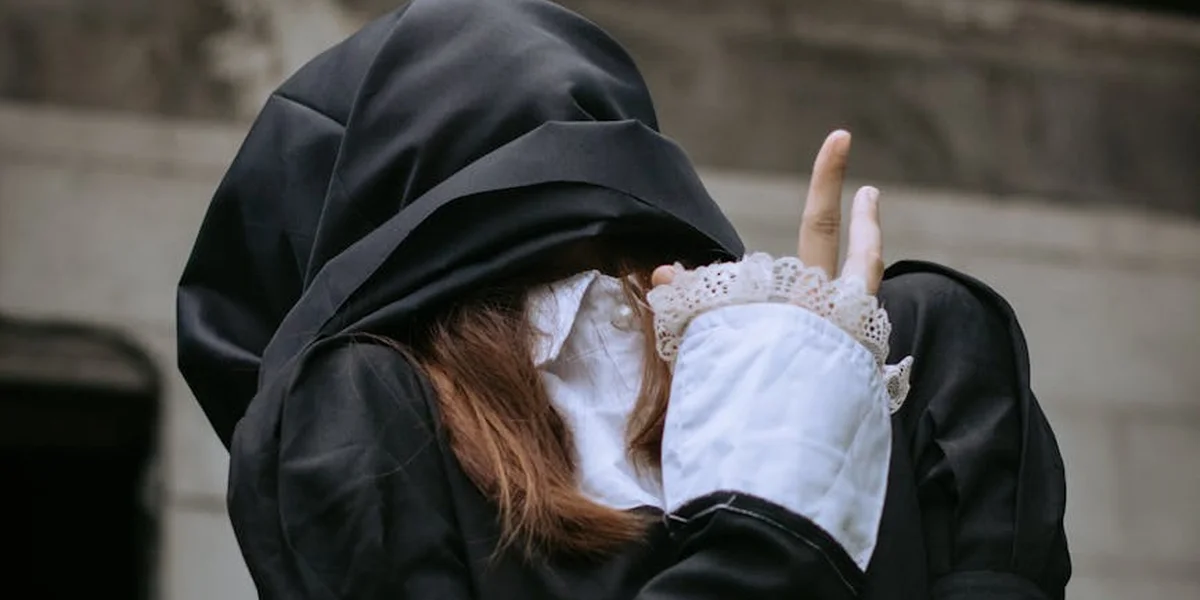
To truly understand your visitor, we must look beyond your own mind. The hood is an archetype, a shape that carries centuries of collective meaning. Separating these cultural echoes from your personal resonance is a vital step.
- Mourners and Monks: In many traditions, hoods denote grief, solemnity, and withdrawal from the world for introspection.
- Judges and Executioners: Here, the hood represents anonymized authority, final judgment, and cold, impersonal justice.
- Scholars and Alchemists: Medieval art often depicts wise men in hoods, symbolizing hidden knowledge, mystery, and the pursuit of esoteric truth.
- Protectors and Travelers: A simple hooded cloak offers shelter from the storm, representing a journey, anonymity for safety, or retreat.
Robes of Ritual: Monks, Mourners, and Mystics
In spiritual practice, the hood serves a dual purpose. It shields the wearer from distraction, turning attention inward toward contemplation and prayer. This ritual use transforms the hood from a mask of fear into a garment of sacred focus and transition. Contrast this with the Grim Reaper’s hood, which anonymizes the universal transition of death. One hood signifies a chosen spiritual journey, the other an inevitable, unknown passage. Your dream figure’ demeanor will clue you into which association is at play.
The Hood in Story and Screen
Our modern lexicon is filled with hooded imagery. From the ominous allure of Star Wars’ Sith Lords to the humble wisdom of fantasy wizards, from comic book assassins to the anonymous vigilante. Fictional portrayals powerfully shape our subconscious symbolism, attaching emotions of dread, mystery, or hope to the simple shape of a hood. Reflect on the media you consume. Does your dream figure move like a cinematic villain, or stand with the patience of a guide from your favorite novel? That reflection is not trivial-it’s decoding your mind’s borrowed language.
Your Personal Lexicon of Symbols
This is the most crucial layer. What does a hood mean to *you*? To find out, follow these steps:
- Free-associate. Say “hood” out loud and jot down the first five words that pop up (e.g., hide, cold, safe, secret, judge).
- Recall your earliest memory of being affected by a hooded figure, real or fictional. What emotion was tied to it?
- Ask: In my current life, what do I feel the need to conceal? What do I feel the need to protect myself from?
Your personal lexicon holds the ultimate translation guide, turning a generic symbol into a precise message from your soul. Trust that your unique history with this symbol is the most important interpretation of all.
From Fear to Awakening: How to Respond to Your Dream
Waking from a dream with a black hooded figure can leave your heart pounding and your mind in a haze. This jarring experience is not an end point, but a powerful beginning for personal growth and emotional healing. I remember my own dreams of ominous figures, and how moving from fear to curiosity changed everything. Here is a gentle, step-by-step path to transform that nightmare into a source of resilience and intuitive trust.
Step 1: Journal the Shadow
Before the dream’s details fade, grab a notebook. Writing is a act of reclaiming power from the vague fear. Naming the emotions you felt—dread, curiosity, coldness—robs them of their hidden control over you. Use these prompts to start your journal entry:
- Describe the figure’s stance and any details you recall. Was it still or moving?
- Where did the dream take place? A familiar street or a strange, foggy landscape?
- What was the predominant feeling the moment you saw it? Write it in one raw word.
- What happened right before you woke up? Note the final image or sensation.
Step 2: Dialogue with Your Dream Figure
In a quiet, safe space during the day, try a method called active imagination. Close your eyes and gently recall the figure. Ask it, in your mind, a simple question like “What do you represent?” or “What do you need me to know?” Wait patiently for any words, images, or feelings to arise. This isn’t about summoning fear, but about opening a channel to your own subconscious. I’ve found that this practice often reveals the figure as a misunderstood part of myself seeking attention.
Step 3: Cultivate Daylight Resilience
Dream work shines a light on what needs care in your waking life. Small, consistent actions in your daily routine build a foundation that makes nightmares less frightening. Take a moment to interpret what your nightmares are telling you; understanding the message is the first step toward overcoming them. When you see the dream’s meaning, you can tailor your actions to ease future nightmares. If the dream echoed anxiety about loss of control, practice setting one gentle boundary tomorrow. If it spoke to isolation, reach out to a friend for a brief, real connection. Trust that your intuition is guiding you toward these healing actions, one step at a time.
Step 4: Ensuring Peaceful Sleep
Creating a serene pre-sleep ritual signals to your brain that it’s time for rest, not for turmoil. A calm bedtime environment can significantly reduce the frequency of unsettling dreams. From my own experience, I always keep a notebook by my bed to jot down worries before turning off the light. Try these simple tips:
- Dim the lights and avoid screens for at least 30 minutes before bed.
- Practice a few minutes of deep, slow breathing once you’re under the covers.
- Ensure your sleep space feels physically safe and comfortable-a locked door or a favorite blanket can make a big difference.
- Sip a cup of caffeine-free tea while reflecting on one positive moment from your day.
FAQs
Is a black hooded figure a real entity I should be afraid of?
In the context of dream interpretation, the black hooded figure is almost never considered a literal, external entity with a “real face” or “real name” to discover. It is a symbolic projection of your own subconscious. Instead of searching for real photos or evidence, focus on what the figure represents about your inner world, such as hidden fears or unacknowledged emotions, as this is where its true meaning and power lie.
What does it mean when the hooded figure is reaching out to me?
This action signifies a direct attempt at connection or communication from your subconscious. A reaching hand often represents an unavoidable truth, a new direction, or an aspect of yourself trying to get your attention. Your emotional response to the gesture-whether it felt like a comforting guide or a threatening grab-is the key to understanding whether this is a call to embrace change or a warning to heed your intuition.
I saw a hooded figure reading a book in an animation video, and then dreamed about it. What does this mean?
Your mind often borrows imagery from media you consume, like an animation, and repurposes it to deliver a personal message. In dreams, a hooded figure reading a book typically symbolizes hidden knowledge, the decoding of your life’s path, or introspection. Consider what the book or the act of reading means to you personally, as your subconscious has used this familiar visual to point you toward self-reflection or undiscovered information about your own journey.
Finding Peace in the Shadow
When a black-hooded figure visits your sleep, the most powerful step you can take is to greet it with curiosity instead of fear. By turning your attention inward and journaling the dream’s specific emotional weather, you transform a frightening symbol into a profound guide for personal growth.
Trust that this unsettling imagery is often your psyche’s way of initiating necessary emotional work. With patience and self-compassion, you can meet your shadows and understand their message, so fear no more.
At Night Omen, we delve into the fascinating world of dreams to uncover their deeper meanings and symbolism. Our team of dream interpreters and psychological experts is dedicated to providing accurate, insightful interpretations to help you understand the messages your subconscious is sending. Whether you’re seeking clarity after a vivid dream or simply curious about recurring symbols, our trusted resources guide you on your journey of self-discovery through the mysterious realm of dreams.
Nightmares